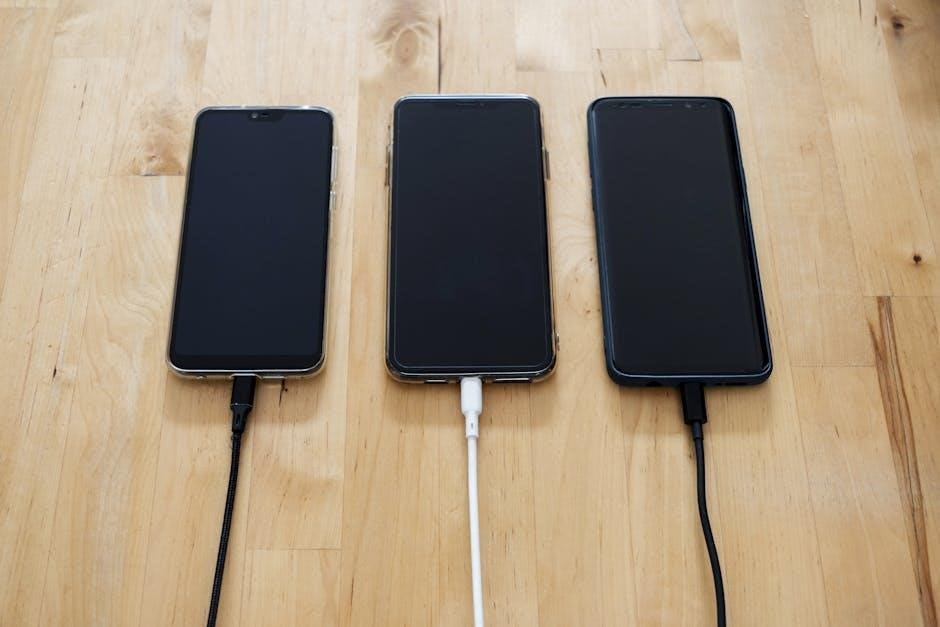
BLACK+DECKER smart battery chargers offer advanced technology for efficient and safe battery maintenance, utilizing high-frequency charging capabilities.
These chargers, detailed in the instruction manual, provide versatile solutions for various battery types, ensuring optimal performance and longevity.
The system restoration feature, similar to Windows, allows for reverting to previous settings, mirroring the charger’s ability to restore battery health.
What is a Smart Battery Charger?
A smart battery charger, like those from BLACK+DECKER, represents a significant advancement over traditional chargers. Unlike older models, these chargers utilize sophisticated algorithms to analyze battery condition and adjust the charging process accordingly. This intelligent approach prevents overcharging, a common cause of battery damage and reduced lifespan.
The instruction manual highlights features like multi-stage charging, which optimizes charging speed and efficiency. Similar to a system restoration point in Windows, a smart charger assesses and “restores” a battery to its peak condition. They can also diagnose issues, potentially repairing batteries through desulfation modes. These chargers aren’t simply power sources; they’re comprehensive battery management systems, offering features like voltage selection and amperage adjustment for diverse battery types.
Benefits of Using a Smart Charger
Employing a BLACK+DECKER smart battery charger, as detailed in the instruction manual, delivers numerous advantages. Primarily, it extends battery life by preventing overcharging and utilizing optimized charging cycles. This is akin to a system restore point, safeguarding against degradation. Smart chargers also offer versatility, handling lead-acid, lithium-ion, and AGM batteries with appropriate mode selection.
Furthermore, features like repair modes can recover deeply discharged batteries, saving replacement costs. The high-frequency technology ensures efficient charging, reducing energy waste. Safety is paramount, with built-in protections against reverse polarity and short circuits. Ultimately, a smart charger provides peace of mind, ensuring reliable power and maximizing battery investment.
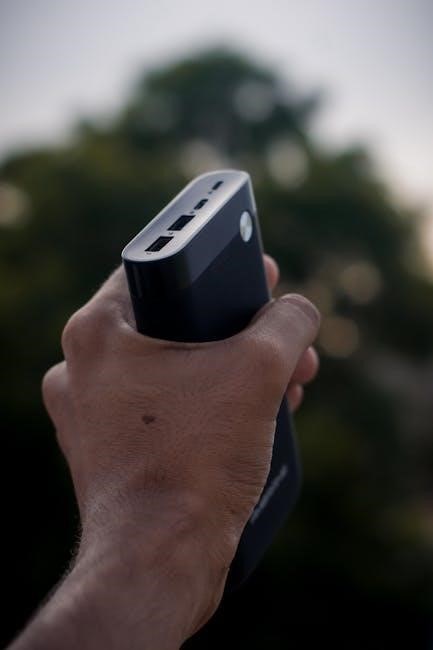
Understanding Your Charger Model
The BLACK+DECKER instruction manual is crucial for identifying your specific model and its unique features. Understanding these specifications ensures correct operation and optimal charging performance.
Identifying Your Specific BLACK+DECKER Model
Locating your specific BLACK+DECKER smart battery charger model number is the first step towards understanding its capabilities. This number, vital for accessing the correct instruction manual and support resources, is typically found on a label affixed to the charger’s casing.
Carefully inspect the charger’s sides, back, or bottom for a sticker or molded-in marking. The model number is often preceded by “Model No.” or a similar identifier. Referencing this number ensures you’re consulting the documentation tailored to your exact unit, avoiding confusion and ensuring safe, effective operation.
The manual will detail specific features and functionalities unique to your model, like voltage settings and charging modes. Accurate identification is paramount for maximizing the charger’s potential and maintaining battery health.
Key Features and Specifications
BLACK+DECKER smart battery chargers boast several key features, detailed within the instruction manual, designed for optimal battery care. These include multi-stage charging, automatically adjusting to maximize battery life and efficiency. High-frequency technology ensures rapid charging without overheating, a crucial safety aspect.
Specifications vary by model, but generally encompass input voltage (typically 120V AC), output voltage (adjustable for different battery types), and charging amperage (ranging from 2A to 10A or higher). The manual outlines compatible battery types – Lead-Acid, Lithium-Ion, and AGM – and their respective charging parameters.
Additional features often include a maintenance mode to prevent overcharging and a repair mode to attempt recovery of deeply discharged batteries.
Safety Precautions
BLACK+DECKER chargers require careful handling, as detailed in the instruction manual; always disconnect power before battery work, and avoid charging damaged batteries.
Proper ventilation is crucial, mirroring system restoration’s need for stable conditions.
General Safety Warnings
BLACK+DECKER emphasizes safety; read the entire instruction manual before operating the smart battery charger. Always disconnect the charger from the power source before connecting or disconnecting batteries. Never charge non-rechargeable batteries, as this can cause overheating, leakage, or explosion.
Ensure adequate ventilation during charging to prevent gas buildup. Do not expose the charger to rain or wet conditions, and avoid operating it in the presence of flammable liquids or gases. This charger is intended for indoor use only. Regularly inspect the charger’s cord and plug for damage, and refrain from using it if any damage is detected.
Like system restoration requiring a stable environment, the charger needs a safe operating space. Modifications to the charger are strictly prohibited, as they may compromise safety and void the warranty. Keep the charger out of reach of children, and never leave it unattended while in operation. Always wear appropriate eye protection when working with batteries.
Battery Safety Guidelines
The BLACK+DECKER smart battery charger instruction manual stresses battery safety. Always inspect batteries for damage – cracks, leaks, or corrosion – before charging. Do not attempt to charge batteries that show signs of damage. Ensure proper battery polarity when connecting to the charger; reverse polarity can cause sparking and potential hazards.
Never mix old and new batteries, or batteries of different types, during charging. Use only batteries recommended for use with the charger, as specified in the manual. Avoid short-circuiting the battery terminals, as this can generate excessive heat and potentially cause a fire.
Similar to a system restore point, a healthy battery is crucial. Dispose of used batteries responsibly, following local regulations. Keep batteries away from heat sources and direct sunlight. If electrolyte comes into contact with skin or eyes, rinse immediately with plenty of water and seek medical attention.

Setting Up the Charger
Before use, consult the BLACK+DECKER instruction manual for component verification. Ensure a stable, dry workspace and connect the charger to a grounded power outlet.
Proper setup, like a system restore, prepares for optimal functionality and safe operation.
Initial Inspection and Component Check
Carefully unpack your BLACK+DECKER Smart Battery Charger and verify all components are present. Refer to the parts list within the instruction manual to confirm you have the charger unit itself, the battery clamps (typically red for positive and black for negative), and any included user documentation.
Inspect the charger for any visible damage sustained during shipping. Check the power cord for cuts or fraying, and ensure the battery clamps are clean and free from corrosion. Do not use the charger if any damage is detected; contact customer support immediately.
Familiarize yourself with the charger’s ports and controls. The manual will detail the location of the DC output, the AC power input, and any indicator lights or buttons. A thorough initial inspection, much like a system check before restoration, ensures safe and effective operation.
Connecting to a Power Source
Before connecting your BLACK+DECKER Smart Battery Charger, ensure the power switch is in the “OFF” position. This precaution, detailed in the instruction manual, prevents accidental sparking when the clamps are connected. Locate a standard AC power outlet – the charger is designed for specific voltage requirements, clearly stated on the unit and in the documentation.
Plug the power cord firmly into the AC outlet. Verify the connection is secure. Do not use extension cords unless absolutely necessary, and if used, ensure they are of sufficient gauge to handle the charger’s power draw.
Avoid connecting to damaged or overloaded circuits, similar to avoiding a corrupted system restore point. A stable power source is crucial for optimal charging and to prevent potential hazards.

Charging Different Battery Types
The manual details charging procedures for Lead-Acid, Lithium-Ion, and AGM batteries, mirroring system restoration options for varied Windows versions.
Proper voltage and amperage selection, crucial for each type, ensures safe and effective charging, like choosing the correct restore point.
Charging Lead-Acid Batteries
Lead-acid battery charging with your BLACK+DECKER smart charger requires careful attention to voltage settings, as outlined in the instruction manual. Begin by verifying the battery’s voltage – typically 6V or 12V – and selecting the corresponding setting on the charger.
Ensure proper polarity connection: red clamp to positive terminal, black to negative. The charger’s automatic detection features will then assess the battery’s condition and initiate the appropriate charging cycle. Similar to a system restore point, the charger analyzes the current state.
Monitor the indicator lights; a flashing light indicates charging, while a solid light signifies completion. Avoid overcharging, as it can damage the battery. Refer to the manual for specific charging times based on battery capacity. Always disconnect the charger before removing the clamps.
Charging Lithium-Ion Batteries
Lithium-ion battery charging with your BLACK+DECKER smart charger demands precise settings, detailed in the instruction manual. These batteries typically require a 4.8V or 8.4V charging voltage; select accordingly. Incorrect voltage can cause damage, much like an improper system restoration.
Always connect the charger clamps with correct polarity – red to positive, black to negative. The smart charger will automatically detect the battery type and adjust the charging process. Monitor the LED indicators for charging status: flashing indicates charging, solid signifies completion.
Lithium-ion batteries don’t require full discharge before recharging. Avoid extreme temperatures during charging. Consult the manual for specific charging times based on battery capacity. Disconnect the charger before detaching the clamps to prevent any electrical hazards.
Charging AGM Batteries
AGM (Absorbent Glass Mat) batteries require a specific charging profile, outlined in your BLACK+DECKER smart charger’s instruction manual. Typically, a 12V or 24V setting is appropriate, depending on the battery’s configuration. Similar to system restoration, selecting the correct parameters is crucial.
AGM batteries benefit from a multi-stage charging process – bulk, absorption, and float – which this smart charger automatically provides. Ensure proper ventilation during charging, as AGM batteries can release hydrogen gas. Monitor the LED indicators for charging progress.
Avoid overcharging, as it can reduce battery lifespan. Refer to the manual for recommended charging currents based on battery capacity. Disconnect the charger immediately after the battery reaches full charge to prevent damage.

Using the Charger’s Functions
The BLACK+DECKER charger, as detailed in the instruction manual, offers voltage selection, amperage adjustment, and modes like charge, maintain, and repair.
These functions, akin to system restoration, optimize charging for diverse battery needs and ensure peak performance.
Voltage Selection
BLACK+DECKER smart battery chargers often support multiple battery voltages, typically 6V and 12V, as outlined in the instruction manual. Correct voltage selection is crucial for safe and effective charging; using the wrong voltage can damage the battery or the charger itself.
Before connecting a battery, always verify its nominal voltage – this information is usually found on the battery label or in the vehicle’s owner’s manual. The charger’s display will indicate the currently selected voltage. To change the voltage, consult the manual for the specific button sequence or menu navigation required for your model.
Similar to a system restore point needing the correct settings, the charger needs the correct voltage to function optimally. Incorrect voltage selection can lead to undercharging or overcharging, reducing battery lifespan and potentially causing hazardous situations.
Amperage Adjustment
BLACK+DECKER smart battery chargers allow for amperage adjustment, a key feature detailed in the instruction manual, to tailor the charging rate to the battery’s capacity. Lower amperage settings are ideal for smaller batteries, while larger batteries benefit from higher amperage for faster charging – but always within safe limits.
The manual will specify the recommended amperage ranges for different battery types and sizes. Overcharging, akin to a system restore reverting to an incorrect date, can damage the battery. Conversely, undercharging may not fully replenish its capacity.
Adjusting amperage often involves pressing dedicated buttons or navigating a menu on the charger’s display. Always prioritize the battery manufacturer’s recommendations for optimal charging amperage.
Mode Selection (e.g., Charge, Maintain, Repair)
The BLACK+DECKER smart battery charger instruction manual details several charging modes: Charge, Maintain, and Repair. ‘Charge’ provides a standard charging cycle, while ‘Maintain’ ensures a fully charged battery stays topped off, preventing sulfation – similar to a system restore keeping settings current.
The ‘Repair’ mode attempts to revitalize deeply discharged batteries by employing a specialized charging algorithm. This mode isn’t always successful, but can often recover batteries deemed unusable. Selecting the correct mode is crucial; improper selection could damage the battery.
Mode selection typically involves pressing a mode button until the desired function illuminates on the charger’s display. Refer to the manual for specific instructions and battery compatibility for each mode.

Understanding the Indicator Lights
The BLACK+DECKER charger’s LED display, as outlined in the instruction manual, communicates charging status and potential issues, like a system restoration indicator.
Decoding these lights is vital for monitoring the charging process and troubleshooting any problems encountered during battery maintenance.
Decoding the LED Display
The BLACK+DECKER smart battery charger’s LED display provides crucial information about the charging process, detailed within the instruction manual. A solid green light typically indicates a fully charged battery, ready for use or maintenance mode. A flashing green light often signifies the charging cycle is in progress, with the speed varying based on battery type and condition.
A red light usually signals an issue, such as a reversed polarity connection, a damaged battery, or an excessively discharged cell. The manual emphasizes checking connections and battery health if a red light appears. A flashing red light may indicate a repair mode attempt or a more serious fault requiring professional attention. Understanding these indicators, much like monitoring a system restoration process, is key to safe and effective battery charging.
Refer to your specific model’s manual for a complete breakdown of all LED combinations and their corresponding meanings.
Troubleshooting Indicator Light Issues
If your BLACK+DECKER smart battery charger displays unexpected indicator lights, consult the instruction manual first. A consistently red light often points to reversed polarity – ensure correct cable connections. A flashing red light might indicate a battery beyond repair, or a charger malfunction. Try a different battery to isolate the problem.
If the charger fails to power on, verify the power source and check the fuse (if applicable). A solid amber light could suggest a temperature issue; allow the charger to cool down. Like troubleshooting a system restoration failure, methodical checking is vital.
If issues persist, avoid disassembly and contact BLACK+DECKER support, referencing your model number for assistance. Never ignore warning lights – they protect both the charger and the battery.

Maintenance and Storage
Regularly clean the BLACK+DECKER charger with a dry cloth, as outlined in the instruction manual, to prevent dust buildup.
Store in a cool, dry place, mirroring system backup practices for data safety and longevity.
Cleaning the Charger
Maintaining a clean BLACK+DECKER smart battery charger is crucial for optimal performance and longevity, as detailed within the instruction manual. Before any cleaning procedure, always disconnect the charger from the power source to prevent electrical shock. Use a soft, dry cloth to wipe down the exterior casing, removing any dust, dirt, or debris that may have accumulated.
Avoid using abrasive cleaners, solvents, or excessive moisture, as these can damage the charger’s components. For stubborn dirt, lightly dampen the cloth with water and immediately dry it afterward. Never immerse the charger in water or any other liquid. Pay particular attention to cleaning the battery terminals and clamps, ensuring they are free from corrosion. A clean connection is vital for efficient charging. Regular cleaning, similar to maintaining a system restore point, helps preserve functionality.
Proper Storage Procedures
Correct storage of your BLACK+DECKER smart battery charger, as outlined in the instruction manual, is essential for preserving its functionality and lifespan. Before storing, ensure the charger is completely cool and dry. Disconnect it from the power source and coil the charging cables neatly to prevent damage. Store the charger in a cool, dry environment, away from direct sunlight, extreme temperatures, and moisture.
Avoid storing the charger in areas prone to dust or debris. A protective case or bag is recommended to shield it from physical damage. Periodically check the charger during storage to ensure no corrosion or deterioration has occurred. Similar to system restoration points, proper storage safeguards against future issues, ensuring it’s ready when needed.
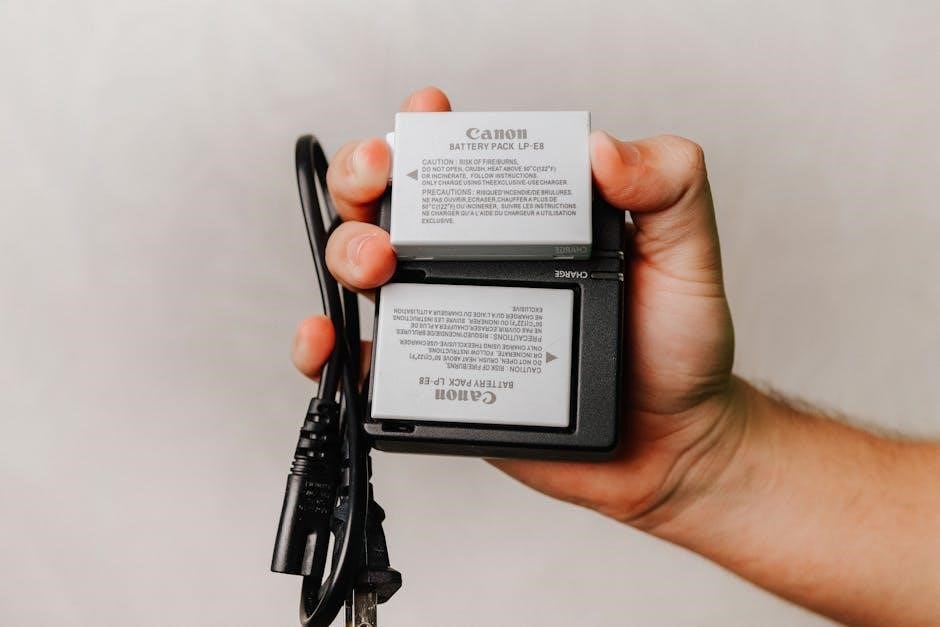
Troubleshooting Common Issues
Refer to the BLACK+DECKER instruction manual for solutions if the charger fails to power on or a battery doesn’t charge. Check power connections and settings.
Like restoring a system, these steps can often resolve minor operational problems quickly and efficiently.
Charger Not Powering On
If your BLACK+DECKER smart battery charger isn’t powering on, first verify the power cord is securely connected to both the charger and a functioning electrical outlet. Test the outlet with another device to confirm it’s delivering power.
Consult the instruction manual for fuse information; a blown fuse is a common cause. Check the charger’s internal fuse (if applicable) and replace it with the correct amperage rating as specified in the manual.
Inspect the power cord for any visible damage, such as cuts or fraying. A damaged cord should be replaced immediately. If the issue persists, and resembles a system failure requiring restoration, contact BLACK+DECKER customer support for assistance, referencing your specific model number.
Do not attempt to disassemble the charger beyond what is outlined in the manual, as this could void the warranty and pose a safety hazard.
Battery Not Charging
If the battery isn’t charging with your BLACK+DECKER smart charger, ensure correct polarity – red clamp to positive (+), black clamp to negative (-). Incorrect connection prevents charging and can damage the battery or charger.
Verify the battery voltage matches the charger’s voltage selection. Refer to the instruction manual for proper voltage settings. A deeply discharged battery may initially show no charging indication; allow a longer charging period.
Inspect the battery terminals for corrosion or debris. Clean them with a wire brush or terminal cleaner. Like a system restoration needing a clean slate, a clean connection is vital. If problems persist, consult the manual’s troubleshooting section or contact BLACK+DECKER support.
Ensure the charger’s selected mode (charge, maintain, repair) is appropriate for the battery type and condition.

Warranty Information
BLACK+DECKER offers a warranty on this smart charger, covering defects in materials and workmanship; see the instruction manual for details.
Coverage length and claim procedures are outlined within, ensuring customer satisfaction and product reliability.
Coverage Details
The BLACK+DECKER smart battery charger warranty typically covers defects arising from normal use and manufacturing flaws for a specified period, often one to three years from the date of purchase.
This warranty extends to repairing or replacing, at BLACK+DECKER’s discretion, any defective parts or the entire unit. It does not cover damage resulting from misuse, abuse, unauthorized repairs, or normal wear and tear.
Specifically, the warranty excludes issues caused by improper battery connection, incorrect voltage selection, or failure to follow the instruction manual’s guidelines.
Proof of purchase, such as a dated receipt, is essential for validating any warranty claim. The warranty is non-transferable and applies only to the original purchaser.
Certain limitations and exclusions may apply; consult the complete warranty statement within the product’s documentation for comprehensive information.
How to Make a Warranty Claim
To initiate a warranty claim for your BLACK+DECKER smart battery charger, first, retain your original proof of purchase – a dated receipt is crucial. Contact BLACK+DECKER’s customer service department via phone or their website, detailing the issue and providing your product model number.
You may be required to troubleshoot the problem with a representative, referencing the instruction manual for guidance. If the issue persists, you’ll likely receive a Return Merchandise Authorization (RMA) number.
Carefully package the charger, including all accessories, and ship it to the designated service center, clearly displaying the RMA number on the package. Shipping costs may be your responsibility.
Upon receipt and inspection, BLACK+DECKER will determine if the claim is valid and proceed with repair or replacement.